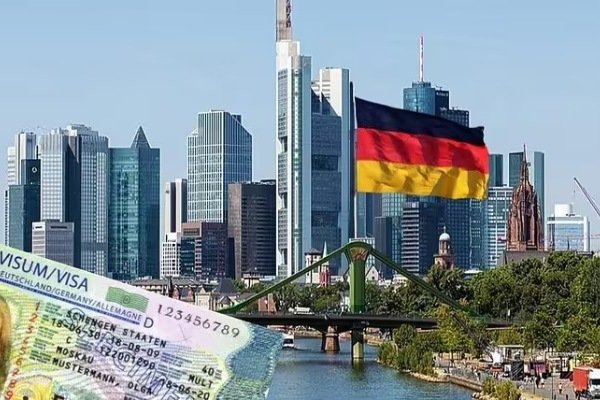
Italy has approved the issuance of 497,550 new work visas for non-EU citizens between 2026 and 2028. Therefore, the decision taken by Giorgia Meloni’s government foresees new work visas in Italy in an attempt to resolve the labor shortage. In other words, thousands of new visas will be available for non-Europeans until 2028 in essential sectors of the Italian economy, such as agriculture, tourism, and services.
Key facts about Italy
Italy is a country rich in culture and boasts one of the best cuisines in the world. Below, we’ll explore some of Italy’s unique characteristics and the reasons why you should visit the country.
- Italy is a land passionate about football! Italians go to stadiums to watch the games. Furthermore, Italy is the second most successful country in World Cup history, with 4 titles, second only to Brazil, which has 5 titles.
- Italy is extremely rich in masterpieces and is one of the countries with the largest number of museums in the world. Italy has more works of art per square meter than anywhere else in the world, and you can visit some very famous museums such as the Galleria Borghese in Rome, the Galleria dell’Accademia in Florence, and the Musei Vaticani in Vatican City.
New work visas in Italy
If you are looking for jobs in Europe, be aware that nearly 500,000 new work visas have been announced for Italy by the country’s government. However, you might ask: Why did Italy decide to release more visas? The answer is that the European country is facing a serious demographic problem. The population is aging rapidly, and the birth rate continues to decline. For example, in 2024/2025 alone, Italy lost more than 50,000 inhabitants, and this trend continues.
At the same time, there is a growing labor shortage in sectors such as agriculture, hospitality, construction, transportation, and home care. Therefore, to keep the economy active, the Italian government needs to fill these vacancies with workers from outside Europe. For this reason, the Italian government intends to attract half a million foreign workers in the coming years.
How many visas will be issued in Italy?
The new decree provides for the issuance of 497,550 visas in Italy between 2026 and 2028, distributed as follows:
- 2026: 164,850 visas
- 2027 and 2028: the remainder is divided proportionally.
In this way, these visas include:
- Non-seasonal subordinate work (permanent employment)
- Self-employment
- Seasonal work (especially in agriculture and tourism)
Read Also: How to Obtain a Portuguese Visa – Documents Needed to Apply
Sectors that are expected to hire the most in Italy
According to the Italian Ministry of Labor and Social Policies, the job openings are concentrated in areas with high demand and low replacement by local workers. See the main sectors:
- Agriculture
- Tourism and Hospitality
- Home care and domestic work
- Civil construction
- Transportation and logistics
- Technical services and manuals
Therefore, Coldiretti, the largest agricultural union in Italy, supports the Italian government’s decree and emphasizes that the measure helps to guarantee food production throughout the country.
New work visas in Italy: Who can apply?
Any citizen from outside the European Union can apply, provided they meet the criteria required by the Italian government. The main requirements are:
- Having a signed employment contract with an Italian company.
- Demonstrate qualifications compatible with the job opening.
- To have a regular status in the country of origin.
- Participate in legal immigration programs authorized by Italy.
However, Italian companies must also register and apply for authorization to hire foreigners within the defined timeframe. Keep in mind, however, that many previous visas did not convert to residency.
Therefore, although the country issued 450,000 visas between 2023 and 2025, only 7.5% to 7.8% resulted in residency permits in Italy. This happens for several reasons, including:
- Excessive bureaucracy
- Lack of clear information for candidates
- Requirement for bilateral agreements with countries that discourage illegal immigration.
The CGIL trade union federation warns that the decree needs to be more efficient and focused on the real needs of the labor market, as well as offering more transparency in the selection process.
Risks for foreign workers
If the government does not adjust the program’s structure, there is a risk of exploitation by criminal networks. These groups take advantage of bureaucratic delays and offer fake jobs or precarious conditions, especially in the agricultural sector. Therefore, it is essential that foreign workers who want to benefit from the new work visas in Italy:
- Use legal and official channels.
- Avoid suspicious intermediaries.
- Check companies and contracts before traveling.
Furthermore, it is essential to always consult official information. Therefore, it is ideal to always check the website of the Italian Ministry of Labor and Social Policies, which updates data on entry visas and application criteria.
The Italian government plans to improve the process.
The Italian government promises to implement tools to improve the process for the thousands of new visas for foreigners in Italy. Therefore, it intends to digitize visa applications, reduce approval times, and establish bilateral agreements with partner countries.
Furthermore, monitoring quota fulfillment by sector and creating mechanisms to protect labor rights are crucial. In other words, these measures aim to ensure the system functions efficiently and prevent fraud.
New work visas in Italy: when will they come into effect?
The new quotas will come into effect in January 2026, meaning it is already effective. Therefore, if you are interested in the new work visas in Italy, follow the announcements from the Italian Ministry of Labor and seek consular guidance in your country of origin.
Furthermore, prepare all the required documentation in advance. Therefore, know that if you seek official information, plan well, and respect the rules of the process, you can find a job in Italy.
Moreover, the opening of 500,000 work visas in Italy marks a new phase in Italian immigration policy. Although it still faces significant challenges, the initiative could represent a good opportunity for foreign workers seeking a new life in Europe in a safer way. Therefore, study Italian and begin planning your immigration in a well-planned manner and with thorough research.
The 10 best cities to live in Italy
1. Bologna
The city, considered one of the most important cities in Italy, gives its name to the oldest university in Europe, founded in 1088. The University of Bologna has more than 100,000 students who live in the city. With approximately 390,000 inhabitants, the city has strong ties to commerce geared towards students, but its economy is also linked to industry.
The cost of living in Bologna is average, and like any university city, it’s important to plan ahead when renting a property, as they are in high demand.
2. Cagliari
The regional capital of Sardinia is lively and touristy and may be the right place for those who want to relax or simply spend some time reflecting on life. Cagliari is a perfect choice for those who enjoy the sea, nature, and a less hectic lifestyle, but without sacrificing the comforts of city life.
With approximately 160,000 inhabitants (the island of Sardinia has a total of 1.6 million), Cagliari has records of inhabitation dating back to the Neolithic period, has been under the rule of various civilizations, and holds a rich history. It is the 26th largest city in Italy and has an advantageous geographical location that guarantees a good quality of life.
The cost of living is lower. For digital nomads, who can work from anywhere in the world without fixed hours, or for retirees seeking a mild climate and a high quality of life at a low cost, Cagliari can be a great option for living in Italy.
3. Florence
It is the birthplace of the Renaissance, the land of Dante Alighieri, Michelangelo, Raphael, and so many other renowned artists. The city has so many works of art scattered throughout its piazzas that it seems more like an open-air museum.
Florence, the largest city in Tuscany, has approximately 380,000 inhabitants. Its metropolitan area exceeds 1 million people. With a strong economy, the city is home to the Gucci factory and is renowned for its textile industry. Tourism is another strong sector in Florence, and regardless of the time of year, you’ll find tourists mesmerized by its beauty.
Those who live in Florence often choose to get around by Vespa or bicycle, since the streets in the city center are narrow and public transport is limited to buses and trams that have limited circulation in the central area.
4. Genoa
Genoa, the birthplace of Christopher Columbus, has approximately 650,000 inhabitants and is a good region to live in Italy, especially for those who like to live by the coast. The city receives a large number of Italians who spend their summer holidays in July and August, and its economy is thriving due to its port.
Genoa is a commercial center for the industrialized regions of Piedmont and Lombardy, two privileged agricultural centers of Northern Italy and Central Europe. The city’s main companies are in the metallurgical, chemical, cement, and paper industries, among others. Another important industry is tourism, especially tourists traveling by sea; the port of Genoa is famous for receiving cruise ships from all over the world.
Compared to other Italian cities, Genoa has a lower cost of living; the rent for a one-bedroom apartment can be found for around €600.
5. Milan
Considered the Italian financial capital, Milan stands out for its bustling life and metropolitan atmosphere. It is the most industrialized city in the country, which also makes it the largest employer. Located in the north, it is the capital of the Lombardy region and has approximately 1.3 million inhabitants, holding the position of the second largest Italian city, behind only the capital, Rome.
Fashion and design professionals often fall in love with Milan. Every year in February, the city kicks off the calendar of world fashion weeks, and in April, it hosts the Salone del Mobile, the most important design fair in the world.
Milan boasts a high quality of life and excellent public services in education, transportation, and healthcare. Residents have access to four metro lines and 95 km of tram tracks to get around. The city is also well-served by airports; two of Italy’s largest are located in the Milanese region: Linate and Malpensa. Such benefits come at a price, which can be more expensive than a pepperoni pizza. Rent for a one-bedroom apartment in Milan starts at €750.
6. Naples
Naples , the third largest city in Italy, is the largest in the south of the country. Over 1 million people live in Naples. Its economy is based on tourism and food production, and it is one of the cheapest cities to live in Italy. The job market isn’t the most attractive, however, it can be a good option for professionals in the culture and education sectors.
The city has deep roots in culture, art, and music. Students can choose from seven Neapolitan universities, and the Naples Academy of Fine Arts and the San Pietro a Majella Conservatory are also highly sought after. The historic center is a UNESCO World Heritage Site.
The cost of living is low compared to Rome and Milan; a student who chooses to rent a room can find prices starting from €300 euros, including expenses. A one-bedroom apartment costs around €500 euros.
7. Palermo
Palermo is the fifth most populous city in Italy, and the main cultural, historical, and economic center of Sicily, the famous island at the tip of the boot. It is also where most of the administrative life takes place and where the region’s prestige is concentrated.
For those who want to live in Europe away from the extreme cold of winter, Palermo is by far one of the best cities to live in Italy, as it has a temperate climate with particularly dry summers and cool, rainy winters.
With a population of 670,000, Palermo offers a good educational program, with one of the best universities not only in the south but in all of Italy. The cost of living in Palermo is among the lowest in the country; the average cost of a single room is €200 per month, while a shared double room averages €150. On the other hand, unemployment in the region is also high, reaching 50% of the population without jobs.
A good option for those who work from home for other parts of the world or retirees seeking quality of life at attractive prices for those aiming to live in Italy.
8. Rome
Living in the Italian capital and one of humanity’s most symbolic cities might be a dream for many, but it can also be expensive. Rome has around 3 million inhabitants and a vibrant, bustling atmosphere. The city, home to the Vatican and the Colosseum, is considered an important cog in the machine that drives the European Union.
With a diversified economy, but with a special focus on tourism, Rome offers jobs in various sectors. Multinational companies, institutional bodies, energy sectors, financial centers, and pharmaceutical companies are located in Rome. Like many major Italian cities, Rome has strong ties to culture and gastronomy, as it is home to some of the world’s leading culinary schools.
The quality of life is good and all kinds of services are available; however, due to the large number of people, delays are common. Public transport schedules, for example, can be quite unreliable for buses, trams, and the metro (3 lines).
Students who choose Rome as a destination for specialized knowledge can choose from world-renowned universities such as the University of La Sapienza, the University of Tor Vergata, and the University of Rome 3.
Rent prices in Rome can vary greatly depending on the area you choose. The monthly cost of a room ranges from €400 to €500, a studio apartment can be found for between €700 and €1,000, and a complete apartment is around €900 to €1,500.
9. Turin
With nearly 1 million inhabitants, the city in northern Italy is located in the Piedmont region and is the third most productive in Italy, as well as being home to renowned universities and polytechnic schools.
Turin was the first capital of Italy, where the Italian unification movement was born. Turin is truly a city marked by pioneering spirit; FIAT was founded there in 1899, and it is also home to other automotive giants such as Iveco, Lancia, and General Motors, as well as the prominent Lavazza coffee industry. Among other large corporations, Turin is home to the state television network RAI and the National Film Museum.
Living in Turin can be a great option for those who want to work, as it has above-average salaries in the country, especially for skilled jobs in the engineering and technology sectors.
The cost of living in Turin is also attractive compared to the quality of life; a one-bedroom apartment costs around €500. Public transport in Turin is well-served and operates 24 hours a day (including buses, trams, and the metro). The network of cycle paths is excellent, and using a bicycle as a means of transport can be a great alternative to owning a car.
10. Verona
The setting of Romeo and Juliet has over 2,000 years of history and is bathed by the Adige River, which lends a special charm to Verona. Located in Veneto, in northeastern Italy, it is a relatively large city with over 260,000 inhabitants.
The economy is based on tourism; the city is located just over 100 km from Venice, and together they attract thousands of visitors annually. Verona also generates activity through industry, crafts, services, and agriculture, mostly with medium-sized investments.
The transportation system is dominated by buses, which are frequent and efficient. For students, Verona is also a good option, especially for those who want to specialize in their field. The city offers undergraduate programs, master’s degrees, master classes, and PhD schools. The universities are mainly located near the old town.
The cost of living in Verona is medium/high by Italian standards, and it’s possible to rent a 1-bedroom apartment for around €900 per month.
Read Also: Care Assistant Jobs in Australia with Visa Sponsorship 2026
Living in Italy: advantages and disadvantages
Many people want to live in Italy for various reasons, whether it’s for a better quality of life and more security, or to learn the Italian language, work, and/or study. Whatever your reason for wanting to move to Italy, it’s necessary to understand the advantages and disadvantages of living in the country shaped like a boot.
Among the advantages of living in Italy, we can mention:
Security
Safety in Italy is much greater to some extent, although Italy is not among the 10 safest countries in the world. According to the Global Peace Index website, Italy is the 33nd country on the list which shows us that Italy is indeed a great option for a safe country to live in Europe, as you can walk the streets of Italy without fear of being robbed. However, be aware that some regions are more developed and safer than others. Therefore, it is important to do thorough research.
Education
Education in Italy offers excellent options for free schools for children and teenagers. Public schools are highly regarded, and Italian universities have very affordable annual fees for students. World-renowned universities are also located in Italy, such as the oldest university in the world, found in Bologna and Milan, which offer courses in Architecture, Design, and Fashion that are considered world-renowned.
Gastronomy
Italy is known for having one of the best cuisines in the world. Italian cuisine isn’t just about pizzas and pasta. In Italian markets, you can find fresh, high-quality vegetables, fruits, and mushrooms, as Italians place great value on food quality.
Drinking Water
Italians drink water directly from the tap, as piped water is potable in most of the country. In mountainous regions, the water has a different taste, being purer, and this difference is noticeable to the palate.
However, in regions with a large number of tourists but a low population density, such as Sardinia, the water supply system can become overloaded at certain times of the year, and the best option in this case may be to consume bottled water.
Among the disadvantages of living in Italy, we can mention:
Euro
For those considering moving to Italy, the ideal is to receive your salary in Euros. If you have a good amount of savings, you can support yourself for some time, but if you receive your salary in the country’s currency, it will be much easier to manage.
Siesta
In Italy, it’s very common for businesses to close during lunchtime, between 12 pm and 2 pm. In some countries, people prioritize certain tasks during lunchtime and get ahead on shopping and small errands during this time. This is generally not possible in Italy, even in the largest cities, and you need to plan ahead to buy medicine, for example, if it’s urgent.
Bureaucracy
In this European country, the bureaucracy is different from that of other countries, as one can request various documents online where it’s possible to resolve several processes at the same time, such as requesting and issuing various documents in a single location.
In Italy, many services require appointments to be attended to by government agencies, especially when requesting documents, and this is not always an easy task, as a large part of the services have little automation and require printed paper and travel to the locations where the requests are made.
Minimum Wage in Italy
The minimum wage in Italy is not defined by specific law. The amounts paid to workers in the country are essentially determined by the market and the contract established between employee and employer.
For jobs that don’t require formal qualifications, the minimum wage in Italy, established by practice, is around €1,200-€1,500 per month. For medium-level qualifications, it’s generally around €1,200, while for jobs requiring technical qualifications, the minimum is around €1,400.
For jobs requiring higher education, salaries range from €1,500 to €5,000, the latter usually for highly experienced professionals in engineering, medicine, and law.
Required documentation for living in Italy
Moving to a country like Italy can be a dream for many immigrants, and to be a resident in Italy, you need to fit into one of these categories: study, work, investment in the country, or retirement.
Study
An exchange program is a great option for those thinking about living in Italy, whether it’s a language course or university admission. There are excellent universities in Italy, such as the University of Bologna, the Scuola Superiore Sant’Anna, and the Scuola Normale Superiore di Pisa.
Work
Getting a job in Italy is one way to live in the country. You can apply for a work visa in Italy.
Local investment
Investing in Italy is another way to live in the country. The government offers a visa for those interested in making a local investment.
European citizenship
If you have dual citizenship and a European passport, you can settle in Italy more easily, as there is less bureaucracy involved in working, obtaining a driver’s license, and getting a visa.
Types of visas for living in Italy
There are several types of visas: work visa, investment visa, study and research visa, medical treatment visa, visa for visiting relatives, re-entry visa, and elective residence visa. The visa application process is practically the same in all cases.
- Apply for a visa at the Italian Embassy or Consulate nearest to your residence;
- Visa application form;
- Income tax / Proof of income;
- Proof of visa requirement;
- Payment of the fee.
Read Also: Canada Working Holiday Visa – Requirements, Jobs & Application Guide
In addition to the visa, you will also need to apply for a Permesso di Soggiorno, which is a document that allows a foreigner to stay in the country. So, besides the visa, as soon as you arrive in Italy, you must also apply for the Permesso di Soggiorno.